Humane Law Enforcement Information (County and Municipality) and County Prosecutor Information at the bottom of the page.
UPDATE:
When Pets Are Left Behind in New Jersey: Law Enforcement Duties When Animals Are Abandoned in Locked Buildings
In New Jersey, reports of animals left inside apartments or homes after an arrest, eviction, hospitalization, or sudden absence are not uncommon. A frequent point of hesitation arises when the door is locked.
Under New Jersey law, a locked door does not eliminate the obligation to investigate potential animal cruelty.
This discussion also raises a related and growing concern: abandoned buildings are sometimes used to conceal unlawful breeding activity.
1. Animal Cruelty Is a Criminal Matter in New Jersey
Animal cruelty enforcement in New Jersey falls under Title 4, particularly N.J.S.A. 4:22-17 et seq.
These statutes prohibit:
-
Abandonment of a domestic animal
-
Failure to provide necessary care, food, or water
-
Causing unnecessary suffering
-
Confining animals without adequate sustenance
Animal cruelty investigations are law enforcement responsibilities. Municipal police officers and certified humane law enforcement officers have enforcement authority. Animal control officers document and assist, but investigative authority rests with law enforcement.
2. Exigent Circumstances Apply to Animals in Distress
The New Jersey Constitution protects against unreasonable searches and seizures. However, exigent circumstances permit warrantless entry when there is probable cause to believe immediate action is necessary to prevent serious harm.
If officers have reason to believe:
-
Animals are confined inside a structure,
-
No caretaker is present,
-
There is risk of starvation, dehydration, illness, or death,
entry may be legally justified.
Indicators include:
-
Audible barking, crying, or scratching
-
Odor of waste or decomposition
-
No utilities functioning
-
Confirmed prolonged absence of occupants
-
Reports of dependent litters
A locked door does not negate exigency when life is at risk.
3. Landlord–Tenant Law Does Not Override Animal Cruelty Statutes
New Jersey landlord-tenant law governs possession and eviction procedures. It protects human occupancy rights.
However:
-
Animal cruelty statutes operate independently of civil tenancy law.
-
Animals are living beings protected by criminal statute.
-
If a tenant is incarcerated or premises appear abandoned, landlords may have entry rights under lease abandonment provisions.
-
Criminal investigation authority remains separate from eviction timelines.
Law enforcement is not required to delay intervention while civil proceedings unfold if probable cause exists that cruelty is occurring.
4. Abandonment Is a Crime in New Jersey
Under N.J.S.A. 4:22-17, abandonment itself constitutes cruelty.
Leaving animals confined without arranging care may meet the statutory definition of abandonment, particularly when:
-
The owner is incarcerated or absent indefinitely
-
No responsible caretaker is designated
-
Food and water are not continuously available
-
Puppies or nursing litters are present
Dependent animals heighten urgency. Puppies cannot survive prolonged confinement without direct care.
5. Emerging Concern: Abandoned Buildings and Illegal Breeding Activity
There is increasing concern across municipalities that abandoned or vacant buildings are being used to house breeding operations. It has been reported that some backyard breeders seek out vacant properties to conceal litters, believing the isolation reduces detection.
In certain instances, individuals have reportedly changed locks and claimed informal “squatter’s rights,” asserting possession despite lacking legal tenancy.
Under New Jersey law, changing locks does not create lawful occupancy. Squatter claims do not override property ownership, nor do they immunize individuals from animal cruelty statutes or local zoning and licensing requirements.
If officers receive credible information that:
-
Litters are being housed in vacant or unauthorized structures,
-
Utilities are not functioning,
-
Sanitation is compromised,
-
Animals are confined without proper care,
those facts may support both cruelty and unlawful occupancy investigations.
Vacant buildings used for breeding pose serious risks:
-
Lack of heat or ventilation
-
Disease transmission among litters
-
No veterinary oversight
-
Structural hazards
-
Concealment of neglect
Such situations require coordinated response between law enforcement, code enforcement, and animal health authorities.
6. Proper Law Enforcement Protocol in New Jersey
A legally appropriate response should include:
Immediate Assessment
-
Document audible and visible indicators
-
Verify occupancy status
-
Determine duration of absence
-
Assess presence of dependent animals
Legal Evaluation
-
Establish probable cause
-
Determine whether exigent circumstances exist
-
Consult supervisory command or municipal prosecutor if needed
Intervention
-
Lawful entry if justified
-
Seizure of animals under statutory authority
-
Immediate veterinary evaluation
-
Documentation of breeding conditions if present
Follow-Up
-
Complete reports
-
Evidence preservation
-
Referral for prosecution where warranted
Turning the matter over solely to property management without investigating potential cruelty does not fulfill statutory responsibility.
7. Balancing Rights Under New Jersey Law
Three interests are implicated:
-
Property rights
-
Occupancy rights
-
Statutory protection of animals
New Jersey law recognizes that preventing imminent harm may justify limited entry when supported by probable cause OR belief.
Changing a lock does not convert unlawful occupancy into protected tenancy.
Vacancy does not eliminate the duty to investigate.
And a locked door does not shield criminal neglect.
Conclusion
In New Jersey, animal cruelty enforcement is not optional and it is not subordinate to landlord-tenant technicalities or informal claims of occupancy.
When credible evidence suggests animals are confined without care — whether abandoned by an absent tenant or concealed within a vacant building used for breeding — law enforcement must assess the matter under Title 4.
A locked door protects property.
It does not protect cruelty.
Animals confined behind those doors depend entirely on lawful, timely intervention.
— The Canine Corner
Understanding Abandoned Dogs in New Jersey When Animals Are Left Behind After an Eviction or Left Behind by Pet Owners
When a dog is left behind after an eviction or left behind by a pet owner who moves without the animal, questions about responsibility and legal requirements quickly arise. In at least one New Jersey municipality, property managers and owners have reported that their requests for animal control to impound these dogs were refused. In the same incident, the ACO told the property owner that “it is the law” that the dog must remain on the property for “thirty days” so the owner could be found and cited a statute to support that claim. The ACO also stated that the property owner had to “keep the dog for the thirty-day period” because “that is what the statute requires.”
These statements were incorrect and inconsistent with New Jersey law. They created uncertainty, left the animal without timely protection, and placed the property owner in a legally vulnerable position. The purpose of this article is to provide clear, statute based guidance so that abandoned animals receive proper care and legal responsibilities are correctly understood.
What the Law Clearly States
New Jersey statutes do not support the ACO’s assertion that a landlord or property owner must keep an abandoned dog for thirty days. The law is clear and specific.
1. N.J.S.A. 2A:18-72 through 84
These statutes apply only to abandoned inanimate property after an eviction.
They do not include live animals.
No part of these statutes requires a landlord to keep a dog for any period of time.
2. N.J.S.A. 4:19-15.16
This statute states that a Certified Animal Control Officer shall seize and impound any stray or abandoned dog.
The duty is placed on animal control, not the property owner.
3. N.J.S.A. 4:19-15.32
The holding period applies only to licensed shelters after impoundment.
Shelters, not landlords, must scan for a microchip, notify the owner, and observe the statutory holding period.
4. N.J.S.A. 4:22-17
Any person who has custody or control of an animal must provide necessary care including protection from adverse weather.
If a landlord follows an incorrect instruction to keep a dog, they may become responsible for care and risk exposure to cruelty charges.
5. N.J.S.A. 4:22-20
It is the former owner, not the property owner, who is guilty of animal abandonment.
Conclusion: There is no New Jersey law requiring a landlord to keep an abandoned dog for thirty days. The ACO’s statements were incorrect. The law requires immediate seizure and impoundment by animal control.
What the Law Covers When Property Is Left Behind
New Jersey’s Abandoned Tenant Property Act covers only abandoned inanimate property such as furniture and personal belongings. It does not apply to live animals. Nothing in N.J.S.A. 2A:18-72 through 84 creates a duty for a landlord to retain, hold, or care for a dog left behind. The statute the ACO attempted to rely upon does not apply to animals and cannot be used to justify a thirty-day holding requirement.
Who Has Legal Responsibility When a Dog Is Left Behind
A dog left behind, whether after an eviction or because an owner vacated without the animal, is governed by New Jersey’s animal control statutes. Under N.J.S.A. 4:19-15.16 a Certified Animal Control Officer must seize and impound any stray or abandoned dog. Once the dog is at a licensed shelter, the facility must scan for a microchip, attempt owner notification, and hold the dog for the statutory period under N.J.S.A. 4:19-15.32.
This ensures that trained personnel, not private individuals, locate the owner and determine the outcome. It also ensures that responsibility remains with the person who abandoned the dog.
Why Landlords Should Not Retain a Dog Left Behind
New Jersey’s cruelty statutes impose legal responsibilities on any person with custody or control of an animal. Under N.J.S.A. 4:22-17, that person must provide food, water, shelter, and protection from adverse weather. In the reported incident, the ACO instructed the property owner to leave the dog outside overnight, which is inconsistent with the statutory obligation to protect animals from harsh conditions.
If a landlord keeps the dog because of incorrect guidance, they may unintentionally assume legal custody, exposing themselves to potential liability. New Jersey law does not permit officers or municipalities to shift animal control duties onto private citizens.
Impact of Municipal Refusal to Impound Dogs and Misstating the Law
The report that at least one municipality refused to impound an abandoned dog and told the landlord to keep the dog for thirty days reveals a significant misapplication of the law. The ACO’s statements were incorrect. The statute cited does not apply to animals. The refusal to impound left the dog unprotected, exposed to adverse weather, and deprived of required shelter and safety.
These actions contradict New Jersey’s animal control and cruelty prevention framework and place both animals and property owners at unnecessary risk.
What Should Occur When a Dog Is Found Left Behind
The proper procedure is clearly established by statute. When a dog is found left behind, a landlord, property manager, or neighbor should contact municipal animal control immediately. A Certified Animal Control Officer must respond and take custody. The dog must then enter the licensed shelter intake process, where statutory holding and notification requirements are completed by trained staff.
There is no legal basis for requiring a landlord to hold an abandoned animal for thirty days.
Why Accurate and Consistent Guidance Matters
New Jersey continues to face significant challenges in animal welfare. Correct interpretation of the law is essential to ensure that abandoned animals receive lawful care, especially during adverse weather. Property owners must not be placed in situations where they assume legal responsibility based on inaccurate information. Municipalities and animal control officers must clearly distinguish between landlord tenant abandoned property rules and animal control statutes.
Consistency across jurisdictions protects animals, protects property owners, and upholds the integrity of New Jersey’s animal control system.
Reporting Animal Cruelty


Protecting animals from cruelty is a responsibility we all share. Like young children, animals cannot escape abusive situations or seek help on their own. You are their voice—speak up for them.
In New Jersey, all animals—whether domestic, wild, or farmed—are protected under the law. To learn more about New Jersey’s Animal Cruelty Statutes, click here.
Steps to Report Animal Cruelty
-
Contact Local Police
If you witness violence, neglect, or abuse, immediately call your local police department. Request to speak with the Humane Law Enforcement Officer (HLEO), who is trained to investigate animal cruelty cases. -
Escalate If Necessary
If you do not receive an adequate response, take the following steps:- Contact the chief of police to report your concerns.
- If the issue persists, contact your county prosecutor’s office, which also has a designated Humane Law Enforcement Officer. Explain your experience with the local authorities and request their assistance.
Your action could save an animal’s life—don’t hesitate to report suspected cruelty or neglect.
Animal Cruelty
As of six years ago, the New Jersey Legislature established the Humane Law Enforcement Officer (HLEO) within law enforcement agencies to handle animal cruelty cases. This means that animal cruelty, as well as any related animal welfare matters falling under the scope of animal cruelty, are investigated by the HLEO or any designated law enforcement officer.
IMPORTANT NOTICE (NJ) - Beginning on February 1, 2017, animal cruelty investigations became the responsibility of law enforcement, and all investigations shall be conducted by Humane Law Enforcement Officers (HLEOs) who report to county prosecutors.
If you suspect animal cruelty or abuse, contact your County Prosecutors Office or local police for assistance.
To Report Animal Cruelty call your local police department.
If you need to report animal cruelty or abuse involving livestock (including horses, cattle, and poultry), contact the New Jersey Department of Agriculture, Division of Animal Health by calling 609-671-6400 or via email: state.veterinarian@ag.nj.gov.
What is Considered Animal Cruelty or Abuse in NJ?
Animal cruelty laws in New Jersey make it a crime to abuse animals in various ways, including:
- torture, maiming, poisoning, or cruelly beating an animal, either intentionally or recklessly
- killing an animal needlessly
- not providing necessary care, and
- leaving an animal alone in a vehicle under harmful conditions (for example, when the temperature in the car is hot enough to threaten the animal’s health or welfare).
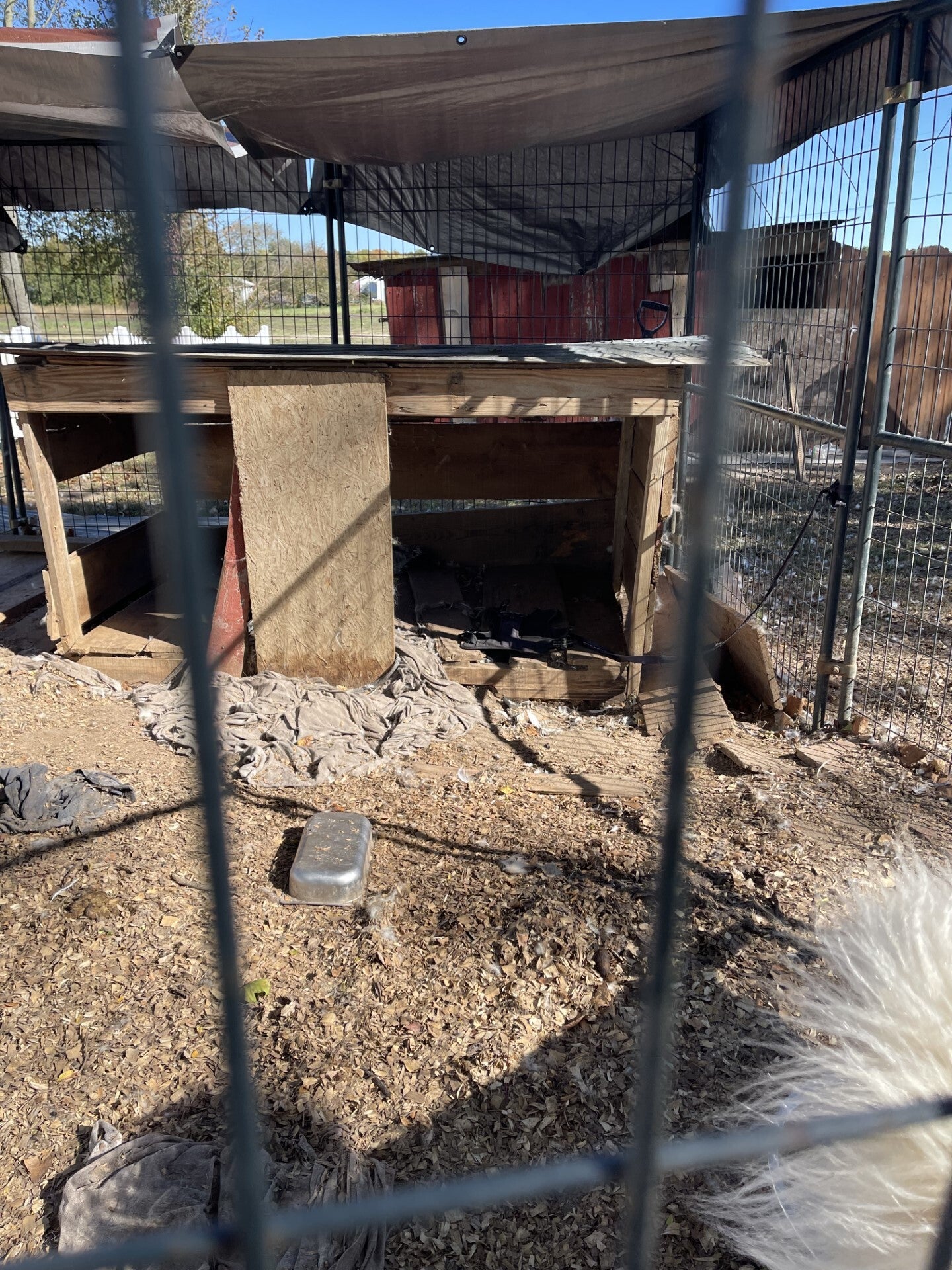
- Any animal outside in adverse environmental conditions without proper shelter
- Any dog improperly tethered and/or tethered between the hours of 11 pm - 5 am.
(N.J. Stat. § 4:22-17 (2022)
Abandoning Animals
Anyone who abandons a domestic animal—or any sick or injured creature—can be found guilty of a “disorderly persons offense” (similar to a misdemeanor) and fined up to $1,000.
(N.J. Stat. § 4:22-20.)
Is it illegal to leave dogs and other pets outside in adverse weather?
It’s illegal in New Jersey to leave dogs, service animals, or any pets in “adverse environmental conditions” for more than 30 minutes unless they have access to a proper shelter or their human caretaker is with them or can see them the whole time. The law defines these adverse conditions as including:
- temperatures below freezing or too hot and
- other bad weather (like wind, rain, snow, ice, sleet, or hail) or dangers (like direct sunlight or hot surfaces) that reasonable people would know could be a risk to the animal’s health.
- the age and physical condition of the animal
- the length of the animal's fur/hair.
Whenever there’s an emergency evacuation order, people must do their best to evacuate with their pets, take them somewhere safe, or at least secure them in a protected area and tell emergency responders where the animals are located.
Anyone who violates these requirements could face the penalties for animal neglect (described above). However, a first offense will generally result in a warning unless authorities had to seize the pet because it was at risk of immediate harm.
(N.J. Stat. §§ 4:22-17.1, 4:22-17.2, 4:22-17.7, 4:22-17.8 (2022).
and more... Refer to NJSA 4:22-17 with the link below.
THE VOICELESS


New Jersey County Prosecutors’ Offices
Atlantic County: 609-909-7800
Bergen County: 201-646-2300
Burlington County: 609-265-5035
Camden County: 856-225-8537 or 856-676-8175
Cape May County: 609-465-1135
Cumberland County: 856-453-0486 Ext. 115
Essex County: 973-621-4700
Gloucester County: 856-384-5500
Hudson County: 201-795-6400
Hunterdon County: 908-788-1129
Mercer County: 609-989-6309
Middlesex County: 732-745-3300
Monmouth County: The Office of the Monmouth County Prosecutor and the Monmouth County SPCA have set up a hotline. Instead of the police, please call 877-898-7297.
Morris County: 973-285-6200
Ocean County: 732-929-2027
Passaic County: 973-881-4800
Salem County: 856-935-7510 Ext. 8333
Somerset County: 908-231-7100
Sussex County: 973-383-1570
Union County: 908-527-4500
Warren County: 908-475-6287
HLEO Info by County
CAPE MAY - no response
ESSEX - no response
MERCER (2026 info)
MIDDLESEX - The Humane Law Enforcement Officers at the Middlesex County Prosecutor’s Office are Detective Z. Oleneski, Detective K. Hueston, Detective W. Dugan and Detective G. Macdonald.
No other data was available from the county.
MONMOUTH - no response
PASSAIC - no response
SUSSEX (2026 info)
WARREN -(2026 info)
COUNTY INFO ONLY
Be a Hero
Be their Voice