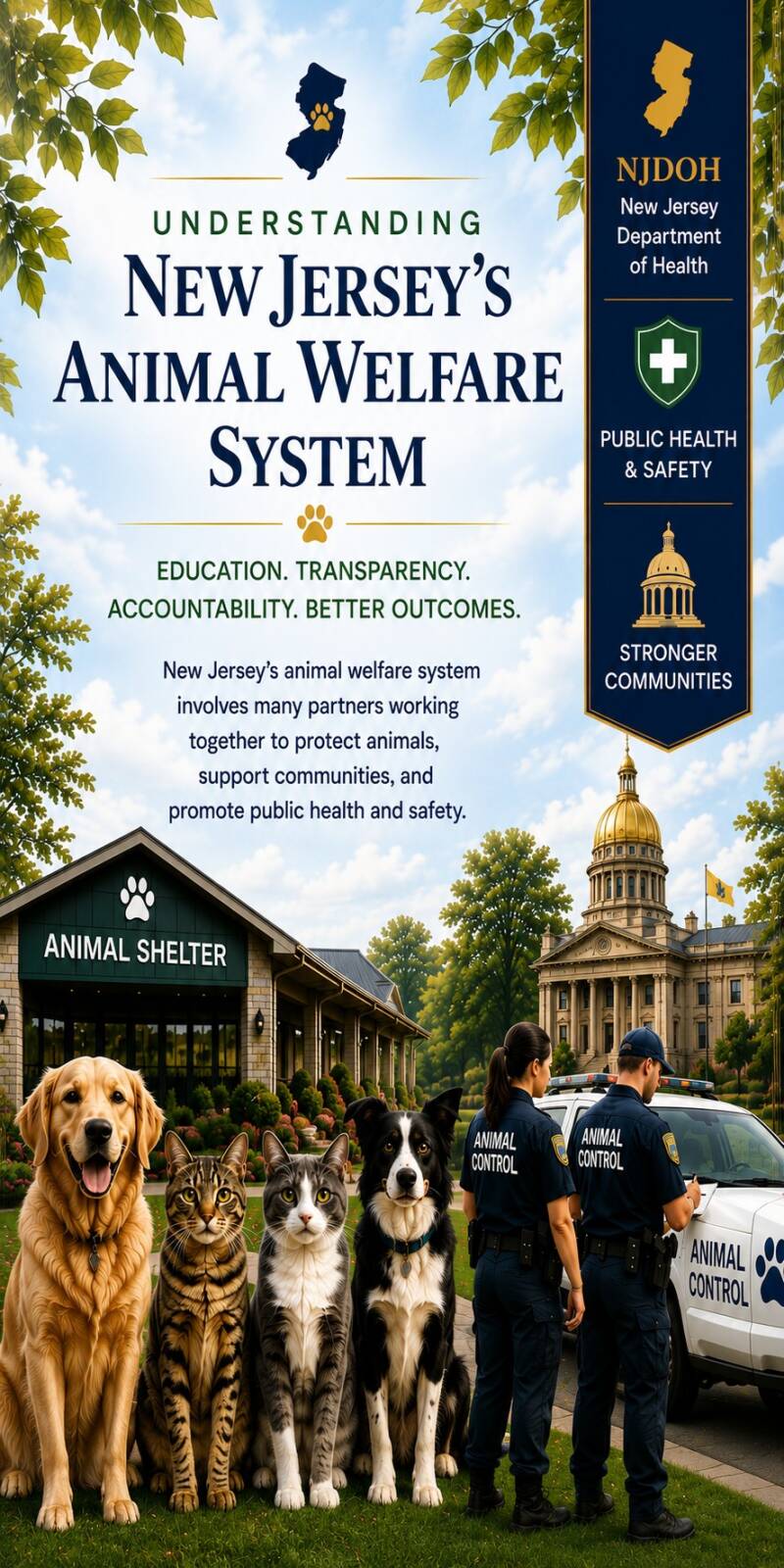
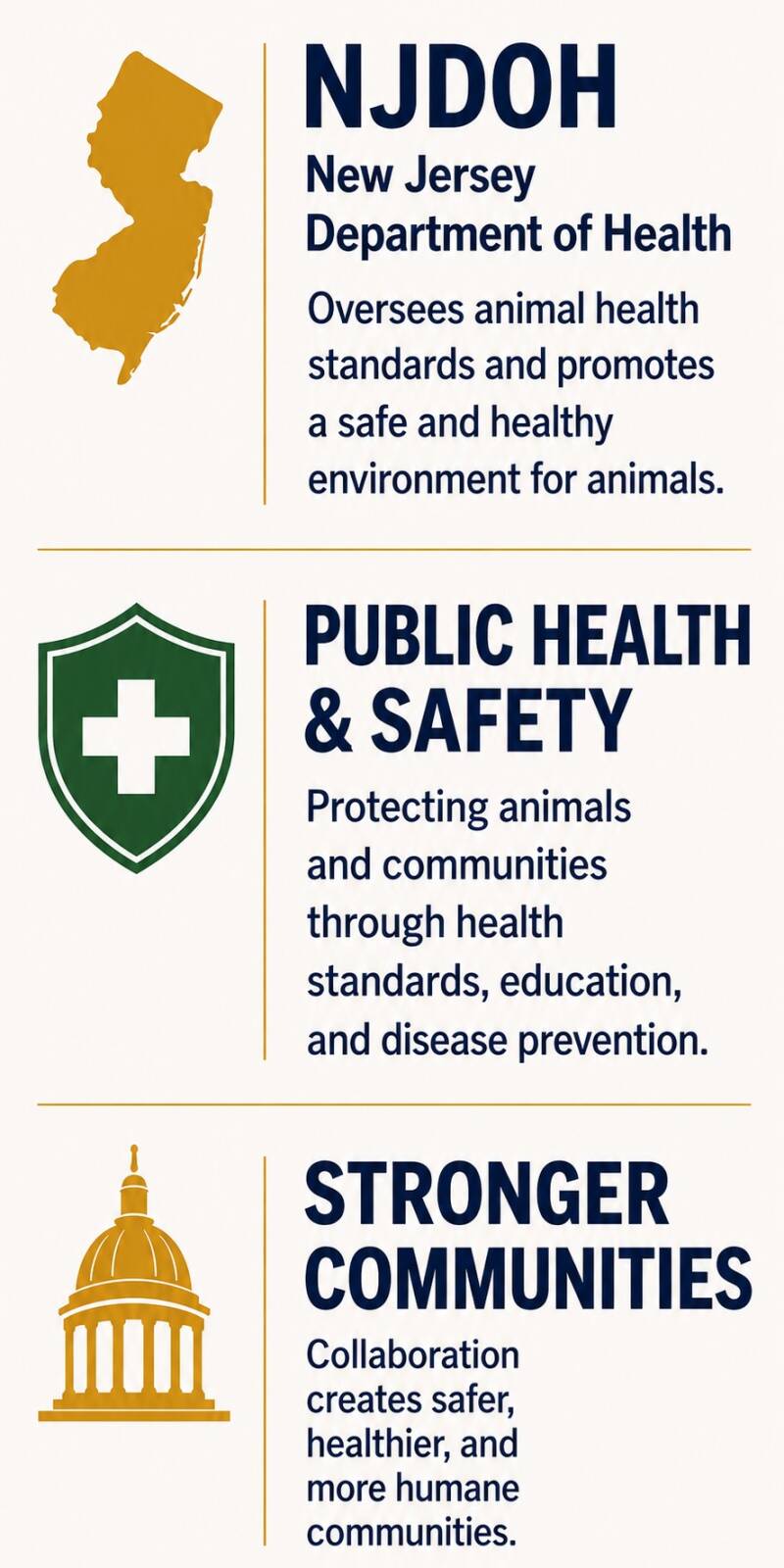
How New Jersey’s Animal Welfare System Works — more accessible and straightforward for the general public
What Should a Moden Animal-Control System Look Like In NJ?
Animal control is more than picking up stray animals. It is a governmental function involving public health, public safety, municipal services, law enforcement, animal welfare, and the rights of animal owners.
New Jersey already has laws and regulations governing Animal Control Officers, municipalities, shelters, pounds, impoundment, and rabies control.
The question is simple:
Is the system operating as efficiently, consistently, and transparently as it should?
Modernization does not necessarily mean more government. Often, it means making existing government work better.
Consistent Professional Standards
Animal Control Officers perform important governmental duties involving enforcement, public safety, rabies control, investigations, animal handling, and impoundment. Certification establishes initial qualifications. But laws, regulations, and professional practices change. A modern system should include reasonable continuing education and clearly defined professional standards. This protects the public, municipalities, animals, and the many ACOs who perform their jobs responsibly.
Easy Credential Verification
If New Jersey requires professional credentials, verifying them should be simple. Municipalities, law enforcement, other agencies, and the public should be able to determine whether an ACO's credentials are current without multiple calls, emails, or public-records requests. Government-required credentials should be readily verifiable. People should not have to wait months to obtain an answer from NJDOH via the OPRA process.
Consistent Records
Good government depends on good records. For an impounded animal, records should clearly establish basic information: when and where the animal was found, why it was impounded, who handled the matter, whether identification and a microchip were checked, whether an owner was notified, where the animal was taken, and its ultimate disposition.
Consistent documentation protects municipalities and employees, assists owners and government agencies, and makes meaningful oversight possible. NJDOH is supposed to make sure this happens. Do they in your community?
Clear Responsibility
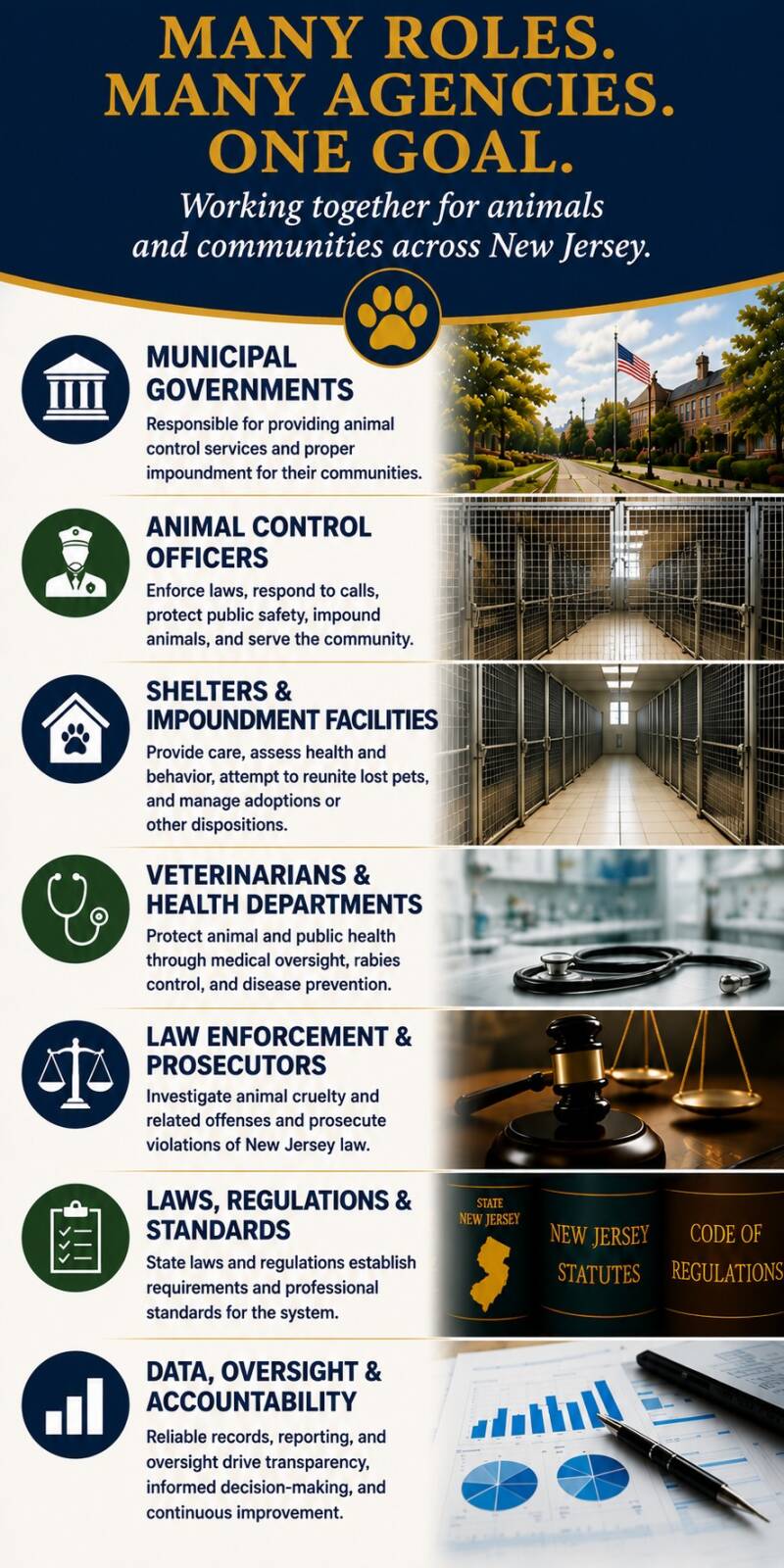
Animal control can involve municipalities, ACOs, impoundment facilities, health departments, veterinarians, law enforcement, and State agencies. Shared responsibility can work. Unclear responsibility does not.
Residents should not have to contact multiple agencies to determine who has jurisdiction, and government officials should not have to repeatedly determine which agency is responsible.
A modern system needs clear lines of responsibility, referral, and oversight.
A Statewide Baseline
New Jersey municipalities have different needs and resources, and appropriate local flexibility should remain. But statewide requirements should provide a consistent minimum standard. Professional qualifications, public-health protections, recordkeeping, and regulatory requirements should not fundamentally change simply because an animal crosses a municipal boundary.
Accountability With Due Process
Government must be able to address legitimate professional or regulatory violations. It must also protect people against arbitrary decisions and unsupported allegations. A credible system should provide clear standards, notice, an opportunity to respond, appropriate review, and meaningful appeal rights.
Accountability and due process strengthen each other.
Reliable Information
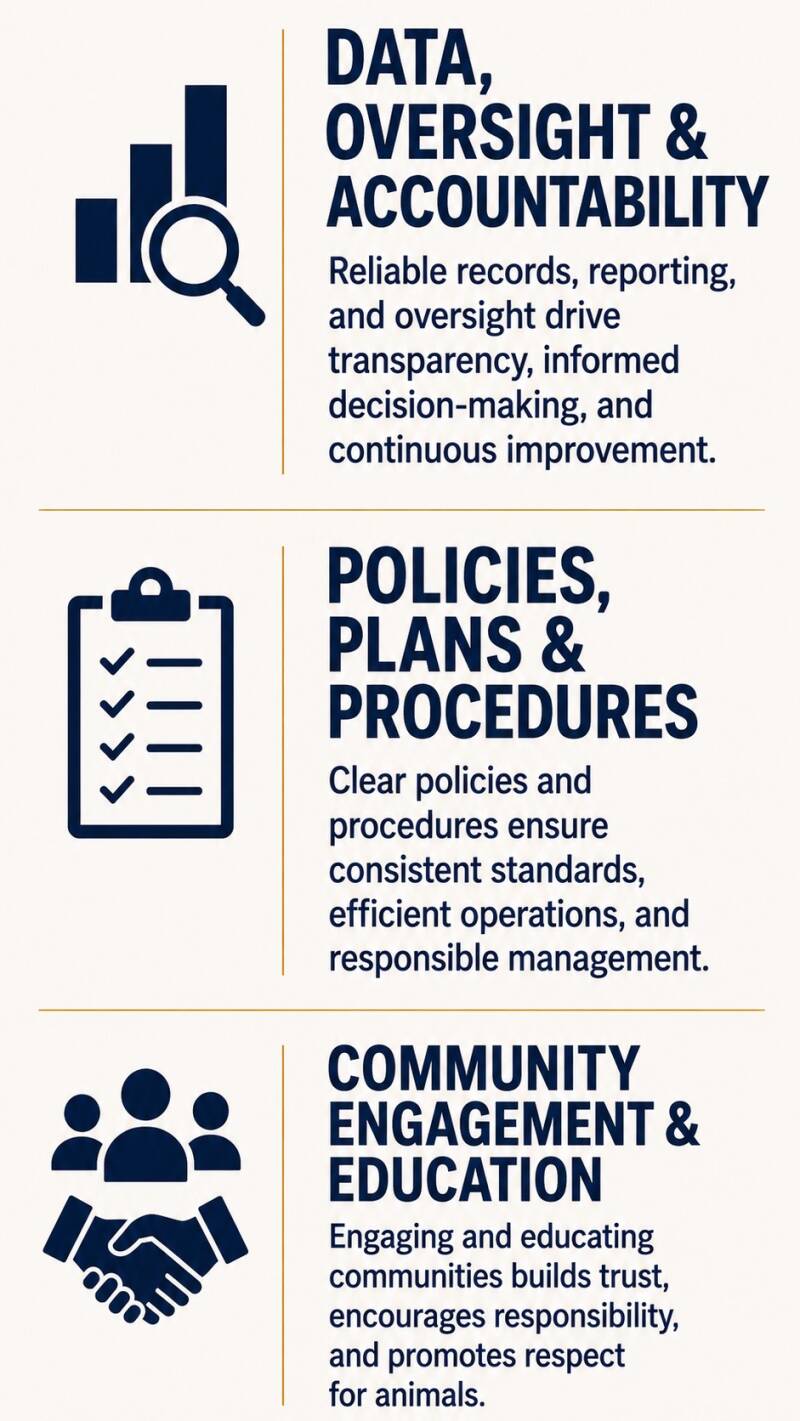
Government cannot effectively manage a system without reliable information. How many animals enter the system? What happens to them? Are municipalities meeting their responsibilities? Where are resources needed?
Standardized reporting can provide policymakers with useful information while reducing repetitive requests and inconsistent data collection. The goal should be useful information, not paperwork for the sake of paperwork. This is not happening in NJ.
Better Government Does Not Have to Mean More Government
A well-designed system can actually reduce bureaucracy.
One reliable credential-verification system instead of repeated inquiries. Clear jurisdiction instead of complaints bouncing between agencies. Standardized records instead of reconstructing incomplete files. Defined responsibilities instead of jurisdictional disputes. Consistent reporting instead of repeatedly requesting the same information.
That is not necessarily bigger government. It is better-organized government.
The Bigger Question
Animal-control discussions often focus on individual shelters, officers, municipalities, or animals. But there is a broader question:
Is New Jersey's animal-control system designed to work as effectively as it can?
A modern system should protect public health and safety, respect municipal authority, establish professional standards, provide due process, maintain reliable records, promote transparency, use public resources efficiently, and protect animals entrusted to government care.
Periodically examining whether an existing governmental system can be clearer, more consistent, more accountable, and more efficient is not criticism of the people working within it.
It is how good government improves.