

Closing Thoughts From 2025
Why Predictability Matters More Than Comfort in the First 30 Days After Adoption, Especially With a Shelter Dog
When a shelter dog enters a new home, adopters naturally focus on comfort. Soft beds, reassurance, affection, treats, and freedom to explore are offered as signs of safety and welcome. While well-intentioned, these gestures often miss what newly adopted dogs need most.
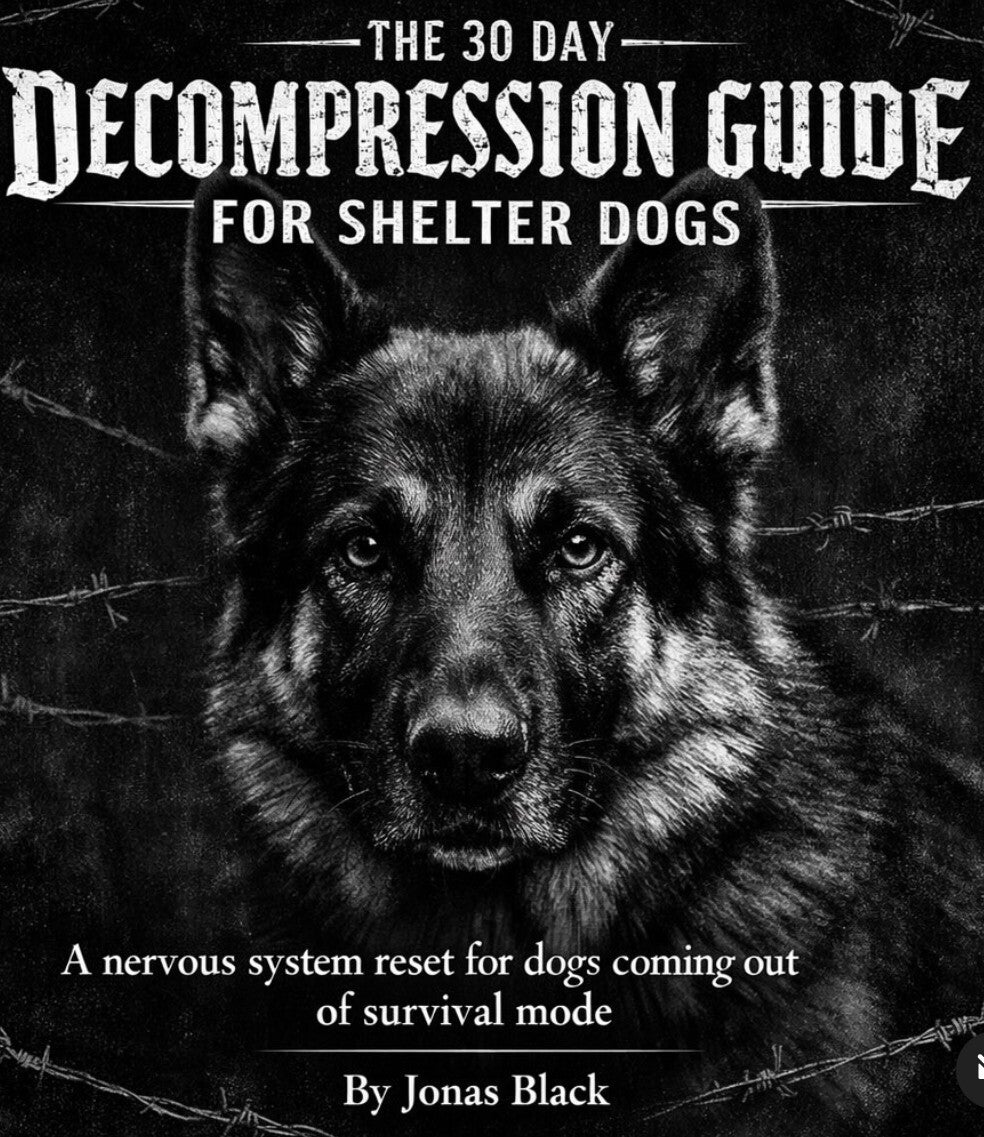
According to dog behavior educator Jonas Black (an amazing trainer), whose work centers on nervous-system regulation and decompression in shelter dogs, predictability, not comfort, is the foundation of successful early adjustment.
Dogs do not experience adoption as a fresh start. Their environment may change overnight, but their nervous systems remain shaped by past instability. Until those internal expectations update, comfort alone rarely produces calm.
Why Unpredictability Keeps Dogs in Survival Mode
As Black explains, dogs coming from shelters or prolonged stress learn to prioritize anticipation over relaxation. Waiting did not always lead to relief. Human behavior was not always consistent. Movement, vigilance, or withdrawal often became survival strategies that worked often enough to be repeated.
When adopters introduce random affection, variable routines, or constant interaction, the dog’s nervous system stays engaged. Even positive experiences require processing. Without reliable patterns, the dog continues to monitor what might happen next.
A comfortable bed does not help a dog who cannot predict when rest will be interrupted. Reassurance does not calm a dog who does not know what follows it. Inconsistent comfort keeps the nervous system guessing—and guessing prevents regulation.
Routine Is Not Restriction
One of Black’s core points is that predictability should not be confused with control. Routine is not about rigid scheduling or dominance. It is about repeated sequences that resolve the same way every time.
Simple, consistent patterns reduce cognitive load. Wake up, go outside, come back in. Eat, then rest. Leash on, short walk, return home. When these rhythms are reliable, the dog no longer needs to stay on alert. The nervous system begins to stand down on its own.
This is why boredom, early on, is not a problem. As Black notes, the ability to tolerate boredom is often the first sign of decompression. A dog who can rest without stimulation is a dog who no longer feels the need to brace.
Why Comfort Works After Stability
Comfort does have a role—but it works best once predictability is in place. When the structure of the day is reliable, affection feels different. Rest becomes deeper. Engagement becomes optional instead of obligatory.
Black emphasizes that dogs who skip this decompression stage often appear to do well until stress enters the picture. A change in routine, visitors, or a new environment can cause sudden regression because the dog was performing safety, not experiencing it.
Predictability builds capacity. Capacity allows learning, bonding, and resilience to develop without constant management.
What the First 30 Days Are Actually For
The first month after adoption is not about obedience, social exposure, or proving success. It is about allowing the nervous system to realize that old survival strategies are no longer necessary.
As articulated in Jonas Black’s decompression framework, stability comes before transformation. When dogs are given consistent structure instead of constant stimulation, behavior improves not because it is forced—but because the dog finally has room to regulate.
For adopters, the work is not to fix the dog. It is to make safety boring, predictable, and reliable enough that the dog no longer has to work so hard to exist.
Credit and Source
This article is based on the decompression principles and 30-day framework developed by Jonas Black, whose work focuses on nervous-system regulation, recovery, and stability in shelter and rescue dogs. Click on the Link to download your own copy.


New Jersey’s Hidden Crisis: Why Municipalities Are Failing Lost, Stray, and Seized Dogs
New Jersey’s laws are clear. Every municipality is required to maintain a licensed animal shelter or contract with a licensed pound to house lost, stray, quarantined, and seized dogs. Yet across the state, a disturbing pattern has emerged: numerous municipalities operate without any lawful impoundment capacity. The result is a silent crisis that leaves dogs at risk and residents without the protections guaranteed under state law.
In several counties, animals have nowhere safe or legal to go. Some towns rely on expired agreements. Others depend on informal arrangements with facilities that are not licensed to accept strays or quarantine bite-case dogs. A few have no arrangements at all.
This failure has real consequences. Lost dogs remain on the streets longer, increasing risk of injury, vehicle strikes, cold exposure, heatstroke, and public safety concerns. Dogs involved in bites may not be properly quarantined, placing residents at risk for rabies exposure. Animals seized during cruelty investigations may remain in dangerous homes because municipal officials have no legal placement option and no willingness to seek corrective action.
Despite these dangers, enforcement is inconsistent. The responsibility lies with municipalities, yet the state has no mechanism to compel compliance or impose penalties.
The Attorney General’s Office has declined involvement in multiple cases where towns have ignored statutory mandates for more than a year. The NJDOH issues inspection reports, but follow-through is rare and often limited to advisory recommendations.
The result is a fragmented, unreliable system in which animals’ safety depends more on local politics and budget decisions than on law and moral duty. The state’s failure to enforce basic statutory requirements has left communities vulnerable and animals exposed to preventable harm.
New Jersey can rectify this. Clear enforcement timelines, state oversight for municipalities in violation, and mandatory action plans would immediately improve animal welfare and public safety. Without decisive intervention, this hidden crisis will continue unchecked, leaving dogs and residents without the protections they deserve.
Outdated Shelter Standards: How New Jersey’s Regulations Leave Dogs Behind
New Jersey’s shelter regulations under N.J.A.C. 8:23A have not been meaningfully updated in decades. While the state’s understanding of animal welfare, behavioral science, public health, and sheltering best practices has advanced, the regulatory framework remains rooted in outdated concepts.
Current regulations establish minimum housing standards but do not adequately address behavioral well-being, population management, kennel-stress mitigation, environmental enrichment, or species-appropriate socialization. They also fail to reflect modern disease-control guidelines embraced by nationally recognized organizations such as the Association of Shelter Veterinarians.
Many municipal shelters operate with limited staff, constrained budgets, and no structured volunteer programs. Some facilities lack proper ventilation, isolation spaces, or reliable HVAC systems. Repeated inspection findings often go uncorrected for years, because regulatory enforcement lacks meaningful penalties or defined timelines for compliance.
Compounding the problem is the absence of a statewide data-collection system. Participation in Shelter Animals Count remains voluntary. This prevents New Jersey from tracking intake, outcomes, length of stay, euthanasia rates, medical trends, or shelter overcrowding patterns. Without reliable data, policymakers cannot identify emerging issues, allocate resources appropriately, or design targeted interventions.
Modernizing the regulatory framework would transform animal welfare across the state. Key reforms should include:
• updated standards for enrichment, behavior, population flow, and kennel-stress mitigation
• minimum continuing education requirements for animal control officers and shelter personnel
• emergency-preparedness and disease-control protocols based on current public-health science
• mandatory public reporting through a statewide data dashboard
• defined consequences for non-compliance and repeat violations enforceable by NJDOH and law enforcement.
Dogs entering New Jersey’s shelter system deserve humane, evidence-based care. Updating outdated regulations is essential to building a modern, accountable framework that protects animals, supports staff, and reflects the values of the communities shelters serve.

The Enforcement Gap: Why Animal Cruelty Cases in New Jersey Break Down
New Jersey’s cruelty statutes are strong on paper. In practice, however, the pathway from complaint to prosecution is unreliable, inconsistent, and deeply dependent on where in the state the case occurs.
County prosecutors vary widely in their approach to animal cruelty. Some prioritize these cases. Others routinely downgrade, delay, or dismiss them. Reports from advocates across the state reveal a troubling trend: many serious cases never progress because they are quietly resolved with minimal penalties or reduced charges. This undermines public trust and leaves victims without justice.
The Attorney General’s Office, which has the authority to provide statewide guidance or intervention, rarely steps in. Advocates have repeatedly raised concerns about municipalities with long-standing patterns of neglect, including the absence of impoundment facilities, repeated failure to enforce quarantine laws, and systemic cruelty concerns. Yet statewide oversight remains limited to non-action.
Another significant contributor is the sluggish pace of investigations through the Division of Consumer Affairs, the Charities Unit, and Consumer Protection. Unlicensed “retail rescues” that operate as pet dealers under the guise of nonprofit status can continue importing puppies, soliciting donations, and issuing questionable medical documentation for years before action is taken. Even when complaints are substantiated, the time between initial reporting and enforcement can span multiple fiscal cycles.
This prolonged pace allows problematic operators to expand, shift business models, and continue generating revenue. Meanwhile, legitimate rescues and shelters are left to compete with entities operating outside legal boundaries.
To correct the enforcement gap, New Jersey needs:
• standardized prosecutorial guidelines for animal-cruelty cases - Statewide not left up to each municipality to implement as they see fit.
• a central reporting and tracking structure for all cruelty complaints where follow up and oversight can happen.
• a proactive oversight role for the Attorney General
• expedited investigations for charity and consumer-fraud violations involving animals
• consistent at-a-minimum requirements for municipalities to retain licensed impoundment facilities, pet stores, kennels, and pounds with a "satisfactory" annual inspection result enforced to receive an annual license.
Without these reforms, the enforcement gap will continue to widen, and animals suffering in silence will remain unprotected in a system not designed to hold offenders accountable.
Every Quarter We Will Try To Give A "Perspective" - an opinion as to how we see certain areas in NJ animal welfare.
We are thankful to all of you who read or visit us. The Canine Corner