

Understanding Reactive Dogs:
How Science-Based, Force-Free Training Can Help
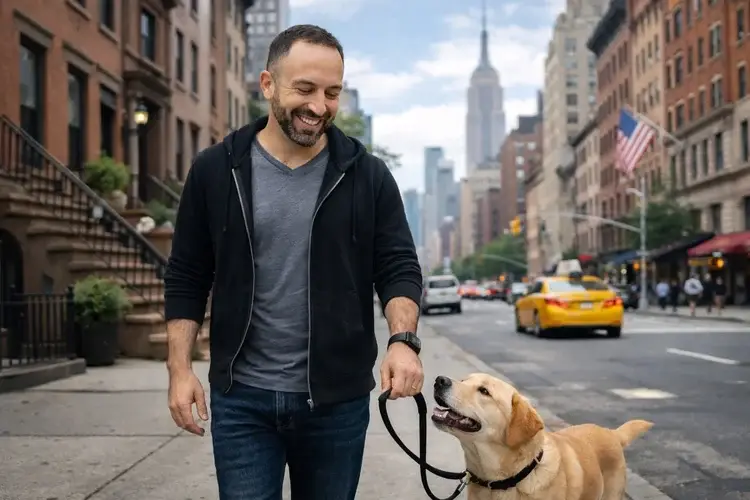
How PJH Dog Training Uses Science-Based, Force-Free Methods to Help Reactive Dogs
A dog that barks, lunges, growls, or becomes overwhelmed during a walk is often labeled aggressive or poorly trained. But reactive behavior may reflect fear, frustration, anxiety, or overstimulation rather than disobedience. Understanding what motivates these reactions is central to the philosophy of PJH Dog Training, a New York City practice specializing in science-based, force-free training and behavior modification. Their approach focuses on identifying the causes of reactivity, helping dogs develop healthier emotional responses, and teaching owners practical strategies for managing challenging situations.
Understanding Canine Reactivity
Reactivity describes an unusually intense response to a stimulus, such as another dog, an unfamiliar person, a bicycle, or a loud noise. Common behaviors include barking, lunging, growling, pulling, and freezing. Reactivity does not automatically mean aggression. A fearful dog may bark to increase distance from a perceived threat, while a frustrated dog may lunge because a leash prevents it from approaching another dog. Identifying the motivation behind the behavior helps determine an appropriate training approach.
Why City Environments Can Be Challenging for Reactive Dogs
Crowded sidewalks, apartment elevators, traffic, construction noise, and unfamiliar dogs can overwhelm dogs sensitive to their surroundings. Repeated exposure to stressful situations may contribute to trigger stacking, where accumulated stress increases the likelihood of a reaction. PJH Dog Training addresses these challenges by helping dogs develop coping skills in the environments where they live, rather than expecting them to tolerate overwhelming situations without preparation.
PJH Dog Training's Philosophy: Address the Cause, Not Just the Reaction
Led by Pepe J. Hernandez, Ph.D., CPDT-KA, PJH Dog Training emphasizes positive reinforcement and force-free behavior modification. Rather than punishing a dog for reacting, their approach focuses on identifying triggers, managing exposure, and helping the dog develop more positive associations.
Two established techniques support this philosophy:
-
Desensitization: Gradually introducing triggers at levels the dog can tolerate.
-
Counterconditioning: Changing the dog's emotional association with a trigger through positive experiences.
This approach is consistent with the American Veterinary Society of Animal Behavior, which recommends reward-based training and cautions against aversive methods that may negatively affect canine welfare. Importantly, force-free training still includes appropriate boundaries, safety precautions, and environmental management.
How PJH Dog Training Helps Reactive Dogs
PJH Dog Training describes its Reactive Resilience Therapy™ program as an individualized, four-stage approach.
1. Stabilization
Identify triggers, reduce overwhelming exposures, and introduce management strategies to prevent repeated stressful encounters.
2. Emotional Reconditioning
Use controlled exposure and positive reinforcement to help dogs develop more comfortable responses to previously stressful situations.
3. Real-World Integration
Practice skills in everyday environments, including sidewalks, apartment buildings, parks, and other locations where reactive behavior occurs.
4. Long-Term Stability
Help owners maintain progress, recognize early warning signs, and manage future challenges. Progress depends on each dog's history, behavioral needs, environment, and consistency of training. Results vary, and behavior modification may require considerable time.
Educating Owners Is Part of the Process
PJH emphasizes teaching owners to recognize canine body language, identify stress signals, and intervene before reactions escalate. Subtle warning signs, such as body stiffness, freezing, intense staring, or difficulty disengaging, may appear before barking or lunging.
Learning to recognize these signals allows owners to make better decisions about distance, exposure, and management. The objective is to give owners practical skills they can use beyond professional training sessions.
Can Behavior Support Help Prevent Owner Surrenders?
Reactivity can make daily walks, apartment living, veterinary visits, and interactions with other dogs or people difficult. Without appropriate support, these challenges may contribute to decisions to surrender or rehome a dog. PJH Dog Training's emphasis on individualized behavior modification and owner education offers a potential avenue for addressing behavioral concerns before they become unmanageable.
However, training alone may not resolve every problem. Dogs displaying severe anxiety, aggression, sudden behavioral changes, or possible pain-related behavior may require veterinary evaluation or specialized behavioral care.
About PJH Dog Training
PJH Dog Training provides science-based, force-free training services in New York City.
According to its published materials, services include:
-
Reactive-dog training and behavior modification
-
Private, individualized training
-
Puppy development and socialization
-
Leash walking and everyday manners
-
Confidence building and behavior support
Their philosophy emphasizes positive reinforcement, emotional well-being, and helping owners better understand their dogs.
Website: https://www.pjhdogtraining.com
Reactive Dog Training: https://www.pjhdogtraining.com/reactive-dog-training-nyc
Looking Beyond the Behavior
PJH Dog Training's philosophy highlights an important distinction: suppressing a dog's reaction is not necessarily the same as addressing what causes it. Their approach emphasizes understanding the dog's emotional response, providing appropriate management, and building skills through individualized, reward-based training. For reactive dogs and their owners, recognizing the reasons behind challenging behavior can be an important first step toward safer, more manageable everyday experiences.
______________________________________________________________________________________________________________________________
References
PJH Dog Training: https://www.pjhdogtraining.com
PJH Reactive Dog Training: https://www.pjhdogtraining.com/reactive-dog-training-nyc
American Veterinary Society of Animal Behavior — Humane Dog Training Position Statement: https://avsab.org/resources/position-statements/
Editor's Note — The Canine Corner: This article reports on PJH Dog Training's published services, philosophy, and approach to canine reactivity. It is not an independent evaluation or guarantee of training results. Individual dogs may require veterinary assessment or specialized behavioral care.